
Top Contentful Alternatives for Enterprises Ready to Move On

Key Takeaways
-
Teams evaluating a Contentful alternative are typically driven by unpredictable usage-based billing, marketer dependency on developers for page publishing, or uncertainty following the Salesforce acquisition.
-
Most alternatives on this list include visual editing as part of the core platform, though some like Contentstack still require developer setup to activate it, and others like Sanity remain developer-first by design.
-
Pricing models vary across the category. Kontent.ai uses a negotiated Flex contract with no API overages, while Storyblok and Sanity still apply usage-based charges at certain tiers.
-
Agility CMS combines fixed predictable pricing, built-in visual editing, and unlimited multi-site and multi-locale support within a single instance.
Contentful is a headless CMS and digital experience platform built for developers and marketing professionals. However, enterprise users have complained about its usage-based billing and lack of visual editing features. Now that Salesforce has acquired the company, there are more than a few reasons to start considering alternatives.
In this article, we’ll break down the reasons why teams are looking outside of Contentful, what to be on the lookout for if you’re among them, and break down the top Contentful alternatives that are a fit for mid-market enterprises.
Why Enterprises Are Questioning Their Contentful Investment
Although Contentful might have served them well for a time, growing businesses and mid-market enterprises are finding their continued investment in the platform for a few reasons:
Usage-based Pricing Punishes Growth
Contentful’s API calls, CDN bandwidth, content type, and spaces limits are based on usage. Although “unlimited” within the enterprise package, Contentful places customers into different categories based on their usage. While this is similar for many enterprise platforms, Contentful can put customers into higher usage tiers without warning, leading to hefty bills when they least expect it. This means that having a few months of high growth can actually cost businesses more.
Visual Editing Still Isn’t Part of the Base Platform
Contentful has traditionally had a steep learning curve, and the base CMS platform doesn’t necessarily cater to non-technical users and marketing teams. Studio, the actual page-building tool, is sold as its own separate product on top of whatever you’re already paying for platform access. This means that content operations slow down because a marketer who wants to move a block on a page likely needs to file a developer ticket or wait on a separate purchase to clear procurement.
The Salesforce Uncertainty
Contentful’s acquisition by Salesforce is likely to be a win for current Salesforce customers, but for current Contentful customers, everything is unknown. Large platform acquisitions like this tend to shift roadmap priorities toward the acquiring company’s strategy. It can also lead the company to deprioritize integrations with competing platforms and eventually change pricing and packaging.
There’s also a jurisdiction question since Contentful operated under European data law as a German company, and as part of Salesforce, it now falls under US jurisdiction, including the CLOUD Act. While no significant changes have occurred yet at the time of writing, this does mean Contentful users could face an uncertain future.
Read More: Salesforce Acquires Contentful: What Enterprise Content Teams Need to Know
How to Audit What You’re Actually Paying for in Contentful
If you’re already running Contentful, you don’t need to panic, but you do need a clear understanding of what could negatively impact you, and whether it's time to consider an alternative. Here are four questions to audit what you’re actually paying for Contentful and whether or no it’s worth it:
-
Have you been moved into a higher usage tier without warning, and did your team have visibility into that change before the bill arrived?
Contentful's usage-based model doesn't require you to request an upgrade for costs to increase. A strong quarter with more users, more API calls, or more CDN bandwidth can push your account into a higher tier on its own. If you’ve ever had to explain an unexpected Contentful invoice to your finance team, then you need to consider these possible “growth penalties” into your assessment.
-
Are you paying for Studio, or a third-party page builder, on top of your base plan, just to give marketers visual editing? What does that add up to once it’s stacked on the Contentful invoice itself?
Studio is a separate product with its own price. So if your team needs visual editing, you're paying for the Contentful platform and for Studio on top of it or integrating another third-party tool to handle something similar. When comparing the potential cost of an alternative, the cost of these add-ons (or potential add-ons if it’s something you were planning to add) need to be considered.
-
How much of your team’s day-to-day publishing still routes through a developer because the base product doesn’t support marketer-owned pages?
Without Studio, Contentful is built for developers. Marketers who need to make layout changes or create new pages are either filing a ticket or waiting on a Studio purchase. If that's a regular occurrence on your team, it's a real cost and puts a strain on your content operations.
Learn More: Try our Developer Dependency Calculator to see how much your CMS is costing you.
-
Is your organization deliberately independent of the Salesforce ecosystem, or are you already a Salesforce shop where a native Contentful integration might actually simplify things?
If your team runs on Salesforce CRM or Marketing Cloud, a tighter integration between your CMS and your CRM could be genuinely useful. However, if you picked Contentful because it was independent, or because being under European data jurisdiction was important to your compliance team, neither of those things is true anymore so it could be time to consider an alternative.
What to Look for in a Contentful Alternative
When considering a Contentful alternative, here are the key factors to look for.
-
Visual editing that comes with the platform
A page builder shouldn't be an add-on. If marketers can't build and update pages without buying a second product or opening a developer ticket, you haven't actually solved the autonomy problem, but just moved it somewhere else.
-
Pricing that stays flat when a campaign performs well
Usage-based billing means a good month can cost more than a slow one. What to look for instead is a cost structure tied to the number of sites or team members, not to the amount of traffic you're driving. The bill should be something you can forecast, not something you reconcile after the fact.
-
API-first architecture that doesn't come with a usage meter attached
Contentful's developer experience is one of the things it genuinely does well. A good alternative should match that, offer full API access, support framework flexibility, and provide REST and GraphQL, without the cost model that makes scaling unpredictable.
-
Multi-site and multi-locale support without a multiplying cost structure
Contentful charges separately for additional Spaces and caps locales based on plan tier, so global teams and multi-brand organizations end up paying more just because of how they're structured. A platform that includes unlimited locales and scales multi-site management by team size rather than by property count keeps that cost from compounding as the organization grows.
The Best Contentful Alternatives for 2026
|
Platform |
Visual Editing Included |
Predictable Pricing |
API-First Flexibility |
Multi-Site and Locale Support |
|
Agility CMS |
Built into Web Studio, no separate purchase or developer ticket |
Fixed pricing scales with sites and team, not traffic or API volume |
Fully API-first, any framework, REST and GraphQL |
Unlimited locales and multiple sites on one instance, no per-space or per-locale cost |
|
Storyblok |
Built into every tier including Enterprise, real-time visual editor |
Custom Enterprise pricing, though traffic overages still apply above included allowances |
Fully API-first, MCP-enabled, supports Next.js, Nuxt, Astro and more |
Multi-language built in, Enterprise supports multiple spaces and editorial teams |
|
Contentstack |
Native Visual Builder included, developer setup required to activate |
Usage-based across entries, API calls and environments, not a flat model |
Fully API-first and MACH-compliant |
Multi-site and multi-locale supported across plans |
|
Kontent.ai |
Web Spotlight included, marketers edit within developer-defined components |
Flex pricing, negotiated contract, no metered API overages |
Fully API-first, REST, GraphQL, webhooks and SDKs |
Spaces for multi-site, multi-locale and multi-brand supported |
|
Sanity |
Fully customizable Studio included on every plan, no separate purchase |
Usage-based, with significant cost jump for enterprise SSO and direct API requests |
Maximum flexibility, GROQ and GraphQL, fully customizable schema |
Multiple datasets and unlimited locales, multi-site via project structure |
Agility CMS
Best For: Enterprises that want an independent vendor and fixed pricing
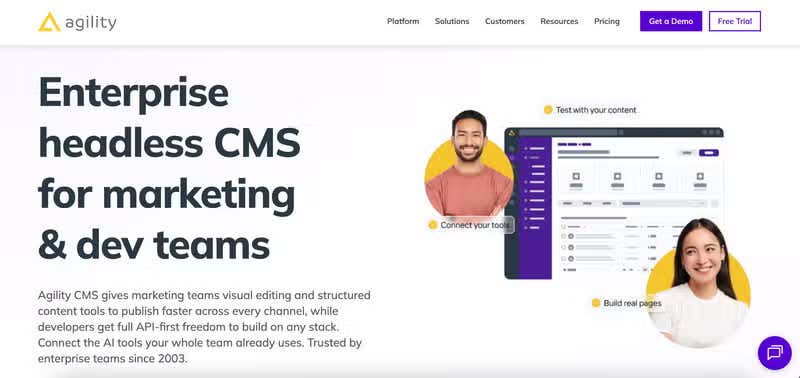
Agility is built around the idea that marketing teams should be able to operate day to day without developer involvement, and developers should keep full freedom to build on whatever stack they already use.
Visual editing without a developer ticket
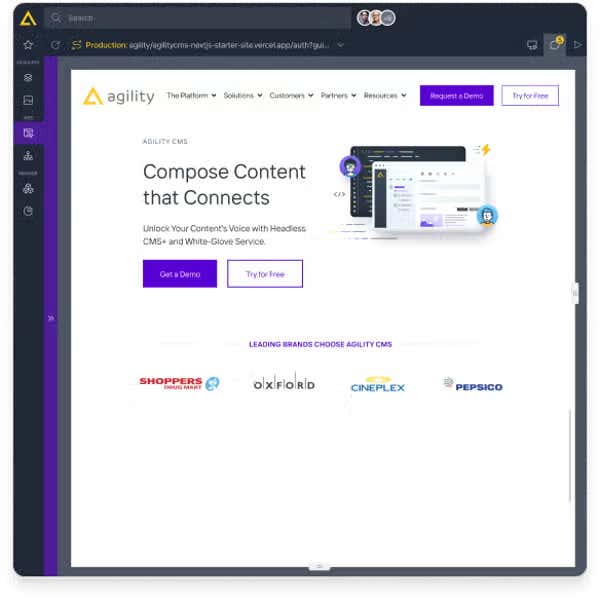
Web Studio is part of the platform itself, not a separate purchase. Marketers get a visual page management layer they can control directly, with built-in governance, audit trails, and permission-based access from day one.
Developers get API-first freedom with no Contentful stack required
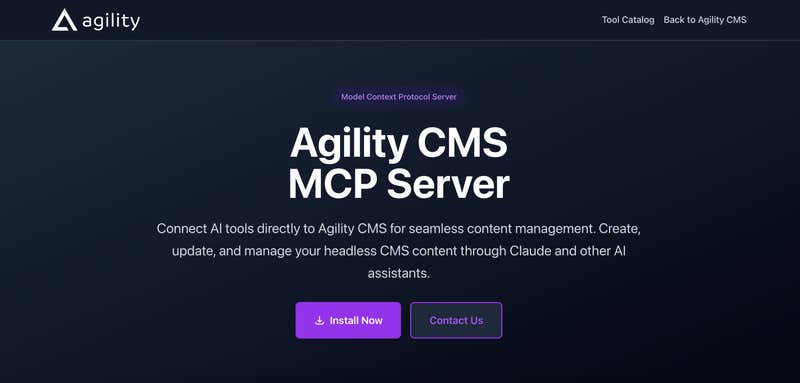
Agility is fully API-first and supports any frontend framework including Next.js, Nuxt, Gatsby, and Astro. Built on .NET developers have complete access to REST APIs and GraphQL. Developers can also connect other tools using these APIs or the Agility CMS MCP Server. There’s no ecosystem to negotiate around, since the platform doesn’t require any other product to deliver its full value.
Pricing that doesn’t move when a campaign performs well
Agility uses fixed pricing that scales with team size and number of sites rather than API call volume, CDN bandwidth, or locale count. This means that a high-traffic month doesn’t change the invoice.
Multi-site and multi-locale support without a multiplying cost structure
Multiple websites, brands, and regions run from a single Agility instance, with unlimited locales included at every plan tier. Contentful charges separately for additional Spaces and caps locales based on plan, so the more global or multi-brand an organization is, the more that model works against it.
Enterprise-grade security and support
Agility is an enterprise-grade CMS that carries SOC 2 Type II certification, GovRAMP registration, and SSO to support governance at scale. Plus as an independent company, there’s no parent platform’s acquisition roadmap to answer to as Agility CMS caters to its customers' needs directly.
Storyblok
Best For: Marketing-led teams that want visual editing
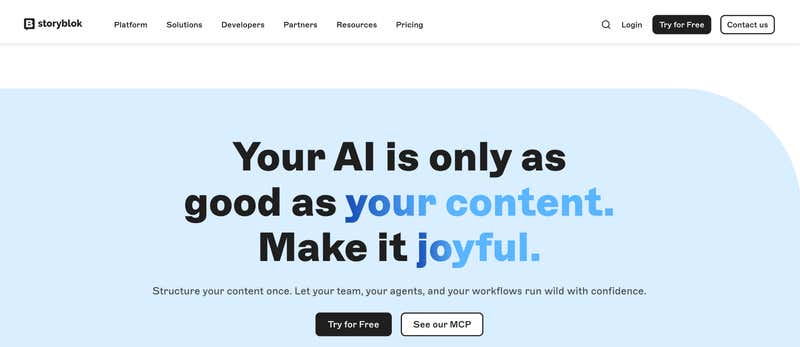
Storyblok is a headless CMS with a visual editor that is appealing for marketing teams. It includes real-time, component-based editing experience where changes appear live in the page preview as they’re made, without needing to save and deploy first. The visual editor is included at every tier, Enterprise included, with unlimited users and custom SLAs at the Enterprise level.
For organizations whose main complaint about Contentful is the Studio add-on creating a dependency wall between marketers and page publishing, Storyblok removes that wall cleanly. However, the Enterprise pricing still includes traffic-based overage charges above each plan’s included allowance, so it doesn’t fully address the unpredictable billing issue Contentful creates.
Contentstack
Best For: Teams that want native visual editing and developer flexibility
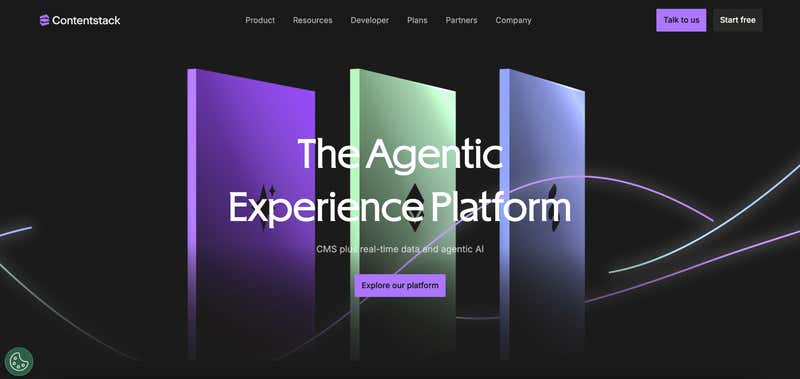
Contentstack offers a Visual Builder that gives marketers real-time, on-page editing natively within the platform, without a separate product purchase. It’s designed for teams that want the same API-first, MACH-compliant flexibility Contentful offers but with a page-building experience marketers can actually use.
Developer setup is required to activate Visual Builder, so it isn’t as zero-friction for non-technical teams. However, it supports real-time editing, drag-and-drop layouts, and marketer-led publishing without requiring a ticket. Additionally, pricing is still usage-based across content entries, API calls, and environments, so it doesn’t solve the predictable billing problem.
Kontent.ai
Best For: Multi-brand enterprises that want one negotiated contract
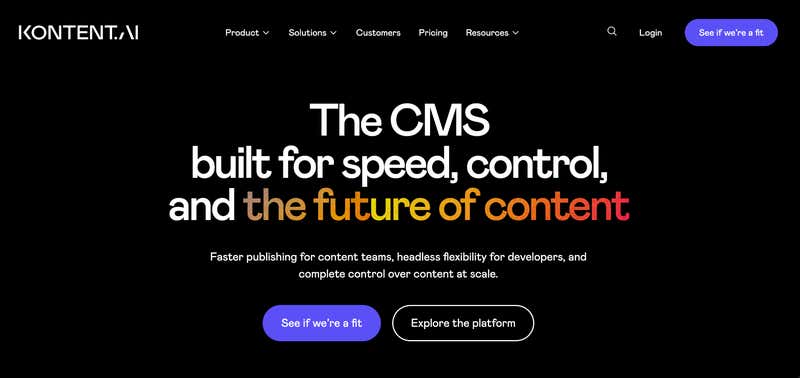
Kontent.ai runs on a negotiated Flex pricing contract rather than metered API billing, so there are no overage surprises tied to traffic spikes or campaign performance. Web Spotlight is built into the platform, allowing marketers to build pages, add content, and rearrange components without opening a developer ticket.
For organizations managing multiple brands or regions within a single instance, Kontent.ai’s Spaces feature enables multi-site publishing within a single project. However, Flex pricing means nothing is published upfront, and everything goes through a sales negotiation before you can estimate cost. This can create a barrier for teams trying to build an internal business case before involving procurement.
Sanity
Best For: Developer-led teams that want maximum customization

Sanity is a developer-first headless CMS that is known for being highly customizable. Multi-locale and multi-site are handled natively through multiple datasets and project structure, and GROQ, alongside GraphQL, gives developers more querying flexibility than most platforms on this list. However, as a developer-first platform Sanity can be complex for marketing teams to manage.
Additionally, Sanity’s model is usage-based and enterprise SSO adds substantial monthly cost on top of seat pricing.
Finding the Right Contentful Alternative for Your Team
The reasons for evaluating a Contentful alternative will vary from team to team. Some teams are dealing with pricing surprises, while others are dealing with too much developer dependency. Meanwhile, others are struggling with managing multiple websites in different languages or the uncertainty of a pending acquisition.
Many of the platforms in our list are able to handle many of Contentful’s drawbacks. However, Agility CMS addresses all of these challenges with built-in visual editing, fixed pricing that doesn't change with traffic, unlimited locales and multi-site support under a single instance.
Also, staying on Contentful isn't necessarily the wrong call. Teams already embedded in the Salesforce ecosystem may find the acquisition simplifies rather than complicates things. That's a legitimate reason to hold.
But if you're mid-contract and the renewal conversation is already happening internally, waiting until the deadline to evaluate options usually means making a rushed decision. Use our ROI calculator to start building the business case and see whether or not it’s time for a change.

About the Author
Bryna is Director of Marketing at Agility CMS. Joining Agility in 2025, she brings over 20 years of experience driving growth for SaaS companies through customer-centric marketing programs. She specializes in building scalable lead generation engines, launching comprehensive webinar series, and designing data-driven email campaigns that deliver measurable results.
She holds a Bachelor of Arts and Communications from York University and a postgraduate certificate in Public Relations and Corporate Communications. As Director of Marketing, Bryna oversees marketing strategy and execution, working closely with the community to deliver valuable content and programs. When she's not driving marketing initiatives,
Bryna enjoys running and cycling, and serves on the Board of Directors for the Canadian Liver Foundation.