
The Best AEM Alternatives When the License Cost No Longer Makes Sense

Key Takeaways
-
Mid-market enterprises are reconsidering AEM mainly due to high licensing and total cost of ownership, the platform's complexity and reliance on dedicated Adobe implementation partners, and the lock-in created by AEM's deep integration with the rest of the Adobe stack.
-
The strongest AEM alternatives offer marketer autonomy without filing a developer ticket, integration flexibility that doesn't depend on one vendor's full product suite, and a lower total cost of ownership that doesn't compound as a content program grows.
-
Other options like Optimizely, Contentstack, Contentful, and Sitecore each solve part of the problem, but each comes with its own trade-off, whether that's usage-based pricing, a suite of separately priced products, or a price tag that doesn't actually drop below AEM's own range.
-
Agility CMS is built to solve all three core AEM pain points at once, with marketer autonomy built into Web Studio, full API-first developer flexibility, fixed pricing that scales with sites rather than usage, and no dependency on the Adobe ecosystem.
Adobe Experience Manager (AEM) has been one of the leading digital experience platforms (DXPs) on the market for some time. For many enterprises, choosing AEM was accepted because that was the platform serious organizations were expected to run.
However, although it is popular, organizations on the platform regularly encounter pricing and ROI issues that make staying on AEM harder to justify. From licensing costs that start high and keep climbing to the pressure to bring in expensive Adobe implementation partners just to stay current on the platform's migration timelines, there are a number of reasons mid-market teams are taking a harder look at what staying on AEM actually costs them.
In this blog, we’ll explain why mid-market enterprises are reconsidering AEM and lay out five alternatives worth a look instead.
Why Enterprises Are Questioning Their AEM Investment
Companies that begin to question whether or not they should continue to invest in AEM are usually doing so due to one of a few reasons:
-
High License Costs: Enterprises are accustomed to high annual license fees for Martech products; however, AEM licenses are among the highest on the CMS/DXP market. Additionally, once implementation and maintenance costs are factored in, the total cost of ownership can reach the six-figure range or higher. Many reviewers on G2 frequently lament how expensive the platform can be.
-
Complexity: Another drawback of AEM is the complexity of the platform and the steep learning curve associated with it. Not only do teams require a dedicated Adobe partner to handle setup and many ongoing tasks, but the platform itself has been described as over-engineered. Consequently, enterprises on the platform can feel overwhelmed by everything it has to offer, without a realistic path to take advantage of everything (without incurring other costs).
-
Vendor Lock-In: Another consideration with AEM is how tightly the platform ties into the rest of the product suite. How AEM integrates with other solutions, such as Analytics, Target, and Commerce, is often one of the most regularly praised aspects of the platform.
However, that depth of integration makes any single piece harder to replace later. It also means that a move toward more composable or best-of-breed tooling requires re-architecting beyond just swapping out one product.
How to Audit What You Actually Use in the Adobe Stack
Most enterprises that use AEM as a CMS are likely to use other products as well. However, before staying on AEM simply because you have other tools, it's best to audit your current Adobe stack.
-
Are you currently using tools like Adobe Analytics, Target, or Commerce?
If your team is actively running Adobe Analytics, Target, or Campaign alongside AEM, the native integration is doing real work, and losing it would mean rebuilding connections your team currently takes for granted. However, if those tools were never fully adopted or have quietly fallen out of use over time, the integration argument for staying on AEM becomes much weaker.
-
How much of your current AEM implementation is managed by an external partner versus your internal team?
An AEM deployment that's mostly managed by an external partner rather than an internal team is a sign that the platform's complexity has become a permanent line item rather than a one-time setup cost, and staying on the platform might not be as beneficial as you think.
-
Is your AEM investment providing measurable content velocity improvements?
If AEM is measurably speeding up how fast content gets live, that's real value worth weighing against the price. However, if it's mostly functioning as infrastructure, your team has to jump through hoops with or constantly beg for help to get work done, the investment isn't paying off the way it should, and a more user-friendly alternative could be beneficial.
What to Look for in an AEM Alternative
If you are considering an AEM alternative, here are some of the non-negotiables that should be considered.
Marketer Autonomy Out of the Box
Marketers should be able to build and publish pages on their own, without filing a request to a developer or an outside implementation partner for routine changes. That includes layout changes, content updates, and new page creation, not just editing text inside an existing template.
Flexible Integrations
Most modern CMS platforms are headless and API-first, which makes connecting to other marketing tools technically possible. The real test is whether those integrations work just as well with tools outside a single vendor's own ecosystem, not only within it. This matters most for analytics, personalization, and marketing automation tools, since those are the systems most likely to come from a different vendor than the CMS itself.
Lower License and TCO
A lower total cost of ownership means a license that starts well below six figures, with implementation and ongoing support priced in from the start rather than discovered later. Maintenance and renewal costs should also hold steady year over year rather than automatically increasing, and this includes the cost of any external partners needed to keep the platform running.
The Best AEM Alternatives for 2026
|
Platform |
Marketer Autonomy |
Integration Flexibility |
Cost Position |
Best for |
|
Agility CMS |
Strong, built into Web Studio, no dev ticket required |
Fully API-first, any framework, no suite lock-in |
Fixed, scales with sites and team, lowest in this group |
Enterprises that want marketer autonomy and fixed pricing |
|
Optimizely |
Moderate, Visual Builder leans toward experimentation more than general publishing |
Modular, but integrations concentrate within Optimizely’s own product family |
Usage-based, lower overall than AEM, but still a multi-product suite rather than one price |
Marketing-led teams that want best-in-class personalization and experimentation |
|
Contentstack |
Strong, native Visual Builder for real-time editing |
Fully API-first and MACH-compliant |
Usage-based, moderate relative to the rest of this group |
Teams that want native visual editing without losing developer flexibility |
|
Contentful |
Limited, visual editing is a separate paid product |
Fully API-first and headless |
Lowest entry point, but the autonomy gap offsets the savings |
Developer-led teams prioritizing headless flexibility over marketer tooling |
|
Sitecore |
Moderate, embedded personalization in the page editor, but still leans on partner support overall |
Cloud-native through SitecoreAI, though still tied to the broader Sitecore ecosystem |
Same premium tier as AEM, not actually a cost relief |
Enterprises that want DXP depth without Adobe’s ecosystem lock-in |
Agility CMS
Best For: Enterprises that want marketer autonomy and fixed pricing
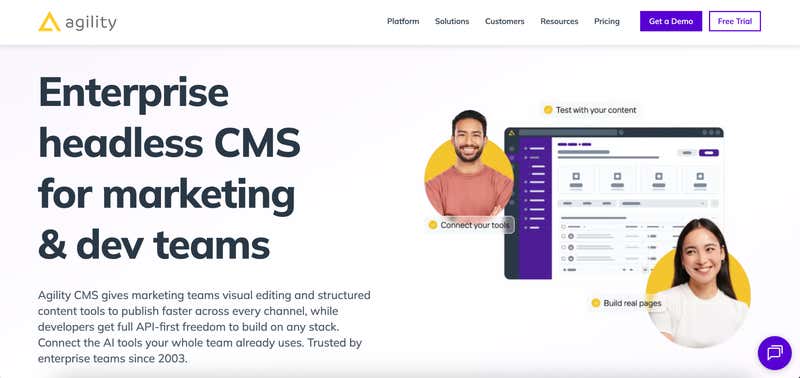
Agility CMS is built around the idea that marketing teams should be able to operate day to day without developer involvement, and developers should keep full freedom to build with whatever stack they choose.
Marketing teams publish without opening a developer ticket
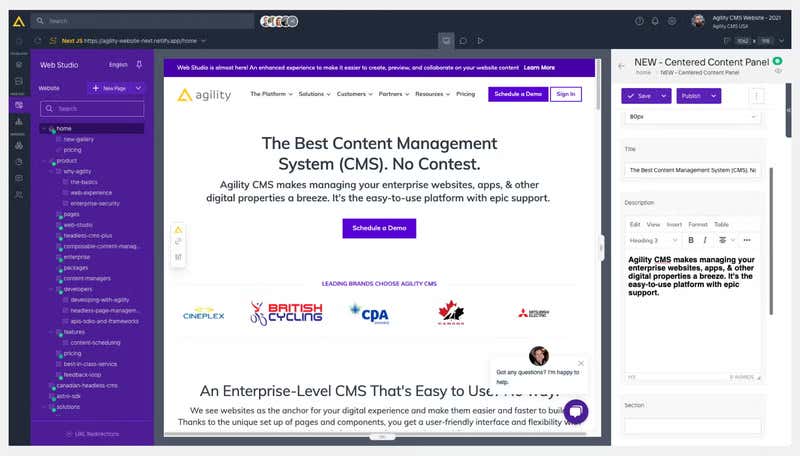
Agility CMS’s Web Studio gives marketers a visual page-management layer they can control directly. Governance, audit trails, and permission-based access are built into the platform, so marketers have full autonomy and only need a developer for routine work.
Developers get API-first freedom with no Adobe stack required
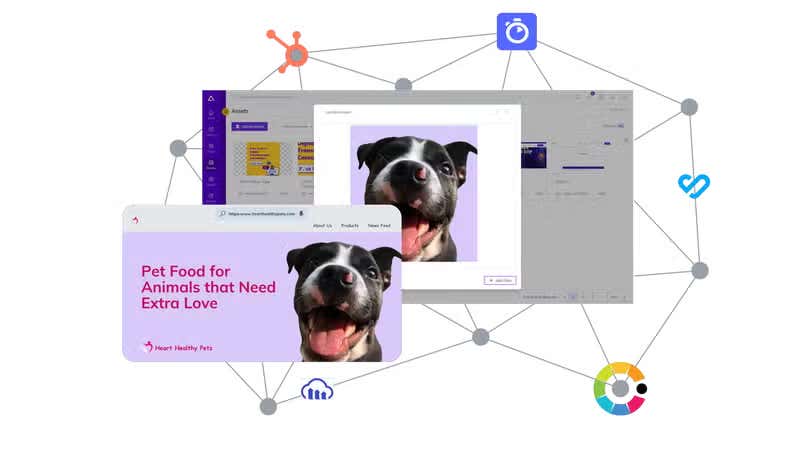
Agility is fully API-first, so developers build on whatever framework they’re already using, Next.js, Nuxt, Gatsby, Astro, or .NET, and pull content through REST or GraphQL. There’s no Adobe ecosystem to half-use and no bundle to negotiate around, since the platform doesn’t require any other product to deliver its full value. Additionally, developers can connect other tools using APIs or the Agility CMS MCP Server.
Pricing is fixed and scales with the business, not the traffic
Agility uses fixed enterprise pricing that scales with team size and number of sites rather than API call volume or page views, so a high-traffic month doesn’t change the invoice. That keeps the total cost predictable, unlike licensing, implementation, and escalating maintenance fees elsewhere.
Multi-site management and independence from any single vendor’s roadmap
Enterprise-grade capabilities mean that multiple websites, brands, and regions can run on a single Agility instance, with SOC 2 Type II certification, GovRAMP registration, and SSO to cover governance at scale. Agility is also a bootstrapped, independent company, which matters to teams whose frustration extends beyond the price tag to the broader Adobe relationship.
Optimizely
Best For: Marketing-led teams that want best-in-class personalization and experimentation

Optimizely is an AI and digital experience platform and one of the closest direct alternatives to AEM, offering content management, experimentation, personalization, and commerce, with the flexibility to license only the pieces actually needed rather than the full suite. The CMS and Personalization are still sold and priced as separate products, so getting real personalization capability still means a second contract, the same structural shape AEM has with Adobe Target.
Optimizely also relies on an implementation partner ecosystem for many enterprise deployments, so the complexity doesn’t disappear entirely; it’s generally lighter than AEM’s specialist-heavy setup rather than absent. Overall cost still tends to fall within AEM’s range, though that’s the price of licensing multiple products, not a single line item.
Contentstack
Best For: Teams that want native visual editing without losing developer flexibility
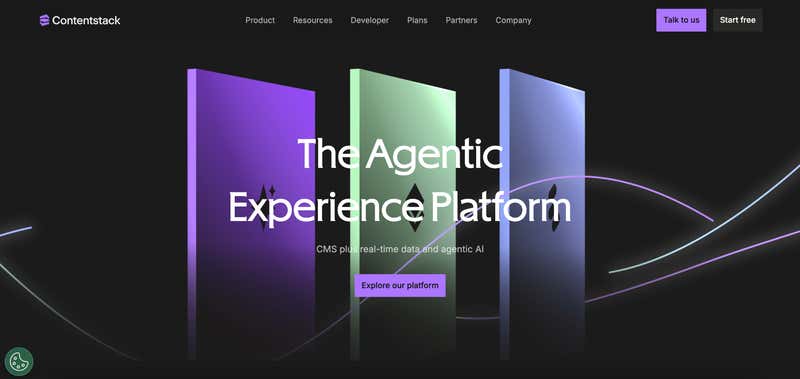
Contentstack is a headless CMS built on a composable, MACH-compliant architecture, with a native Visual Builder that enables marketers to edit content in real time without a separate product purchase. For organizations with strong internal engineering resources who want a best-of-breed setup rather than a single vendor’s full stack, it’s a viable AEM alternative at a fraction of the cost. However, pricing is still usage-based for content entries and API calls, so the bill isn’t fixed like it is with some of the other options here.
Contentful
Best For: Developer-led teams prioritizing headless flexibility over marketer tooling
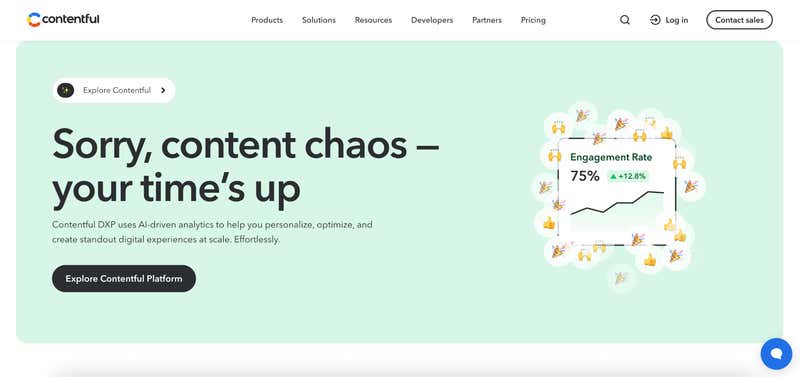
Contentful is a fully API-first headless CMS, and its entry-level plan starts at a small fraction of AEM’s typical contract size. However, visual editing isn’t included at that price: Studio is sold separately, so the marketer-autonomy problem AEM has doesn’t actually go away here; it’s just attached to a much smaller invoice. That makes it a stronger fit for developer-led teams than for marketing-led ones.
Sitecore
Best For: Enterprises that want DXP depth without Adobe’s ecosystem lock-in
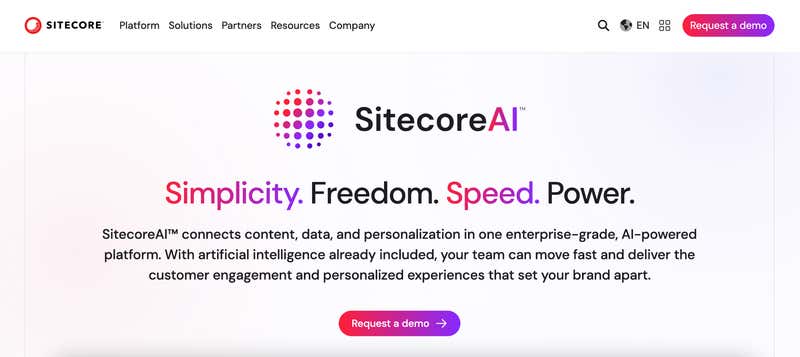
Sitecore is the closest match to AEM’s actual capability level, with personalization built directly into the page editor as part of SitecoreAI’s content management system rather than sold as a separate add-on. However, it shares AEM’s pricing tier rather than escaping it; license fees still start in a comparable range and climb as modules get added, so this isn’t a cost-saving move. It’s a better fit for enterprises whose real objection to AEM is the Adobe relationship, specifically, not the invoice.
Which AEM Alternative Is Right for Your Team
The right AEM alternative depends less on a universal ranking and more on which specific problem your team is trying to fix first.
For teams dealing with all three issues at once, high licensing costs, a steep learning curve that requires outside partners, and deep dependency on the rest of the Adobe stack, Agility CMS is the most complete answer here, since it’s built specifically around marketer autonomy, developer flexibility, and pricing that doesn’t compound the way AEM’s does.
If personalization and experimentation are the actual priority, or your team has the engineering depth to manage a best-of-breed setup, Optimizely or Contentstack are worth evaluating, though neither fully escapes a usage-based pricing model the way Agility does.
Staying on AEM can still be the right call for some organizations, particularly large enterprises already running the full complete Adobe stack, where the native integration is producing real, measurable value that a switch would put at risk.
If an AEM renewal is coming up in the next 6 to 12 months, that’s the moment to evaluate alternatives. You can also see what switching could save you by trying out our ROI calculator.

About the Author
Joanna Olaru-Boyle is a B2B SaaS marketing manager specializing in demand generation and lifecycle campaigns. She has built her career across companies in technology, retail and events, driving multi-channel programs that create demand and attract new customers.
She holds a Bachelor's degree in History and English from the University of Toronto, a Corporate Communications diploma from Centennial College, and is certified as both a Salesforce AI Associate and Salesforce Pardot Specialist.
Joanna thrives where data and creativity meet and is just as passionate about supporting others in their mental health journey as she is about pipeline growth.


